Sunday, 21 April 2013

Another week of not much

Hi guys. I have even less news! I think... *checks reader for things she's starred as vaguely important*

It's Lucy, Queen of Contemporary,'s blogoversary! There'll be a week long thing of celebration. Go say hi!

You know how I watch Supernatural now? Well, this episode I'm on currently has Brad Majors in it. Well, at least his actor, Barry Bostwick.  The Rocky Horror fangirl in me approves and cannot stop laughing.

We have a trailer for Chelsea Pitcher's The S Word. I'm really looking forwards to this one, because the whole slut-shaming topic is an interesting  and relevant one. The trailer looks cool too.


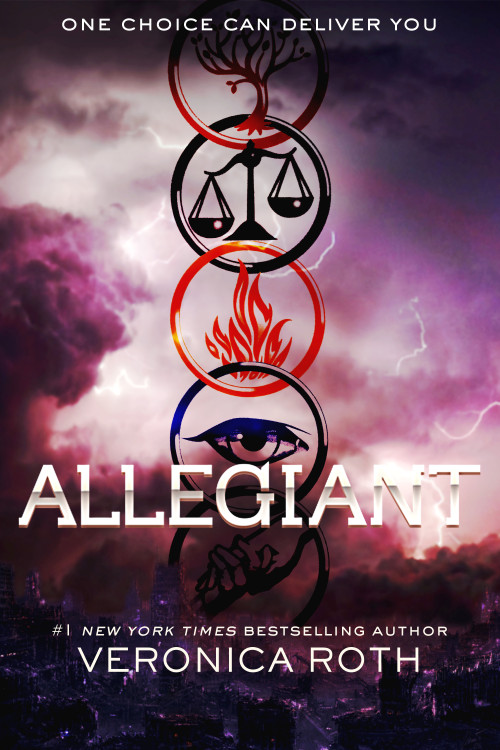
I'm not sure how I missed this but we have a title to Book 3 of Divergent! It's called Allegiant and some beautiful person on the interwebs made this

That's not the official cover. We won't get that for ages. But look at that beauty!! 


I'm taking a bit of a break from blogging for a week. Or three. I'd like to concentrate on my French and Latin. And have a chance at textiles. I'll still read and write reviews and write stories and be hanging around on the internet. I just need to cut something out for a short period of time. Saying that, when telling myself not to do it, I'll probably become amazing at writing posts on time. It's what always happens.  I don't know. 

Awesomeness of the week!

See you all some day. Not sure when. Some day. 

Saturday, 20 April 2013

Book Review- Department 19: Battle Lines by Will Hill


Title: Department 19: Battle Lines
 Author: Will Hill
Series:  Department 19 #3
Published:  28 March 2013 by Harpercollins
Warnings: a LOT of Graphic Violence
Source: netgalley
Other info: Book one, Department 19 was reviewed here and book two, Department 19:The Rising was reviewed here. Book four should exist some day. There’s a set of novellas.
Summary : It's always darkest before dawn.
Secret government unit Department 19 is recovering from evil vampire Valeri Rusmanov's deadly attack on their base. The Department’s newest member, teenage operator Jamie Carpenter, is tasked with training up a new squad, as his friends and colleagues desperately search for ways to try to stop what is coming.
The timing couldn’t be worse for a coordinated, global attack on a number of maximum security prisons and hospitals—with the already-dangerous inmates now on the loose and turned into vampires. One of the escapees has a deep connection to one of the darkest moments in the history of Department 19 and embarks on a quest that threatens to expose the existence of vampires to the public. And with each day that passes, the regenerated Dracula gets stronger, bringing Zero Hour closer.

Review:  The book begins with a load of prisoners and mental patients becoming vampires and breaking free. Of these newly made vampires, Albert Harker, enlists the help of some journalists to expose the world of Vampires. Also, there is a traitor within the department, and Kate and Paul have the task of finding them. Also, there are 52 days to Zero Hour.
I love this series. There’s so much happening, so many characters  to take into account of. Also, the stakes (no pun intended) are always so so high that you can’t stop reading. There’s quite a few subplots woven into this that contribute to the panic of the Department.
The characters, both new and recurring, ware continually well developed. I liked meeting the new vampires, and seeing how their existence affects the Department.  Albert and Mckenna were very interesting. I really liked seeing Larissa on her own, growing even more and finding new things and being independent and such. The splitting up of the main teens lets them develop really well.
It’s really fast paced. Like in the Rising, the action changes settings and focus often, keeping you both engaged and on your toes and reminding you that the situation is crazy for everyone. The action doesn’t stop for one moment, which is amazing for 700 pages of it and the action literally beginning on page one.
I love the length of this series. But I am thinking... how  long is this series going to be? Somewhere it said four books, but I really can’t see that happening. Not without skipping a whole load of stuff. Or letting book 4 qualify as a murder weapon.


Overall:  Strength 4 tea to another great instalment in one of my favourite series.

Friday, 19 April 2013

Book Review- Seraphina by Rachel Hartman


Title: Seraphina
 Author: Rachel Hartman
Series:  Seraphina #1
Published:  10 July 2012 by Random House
Length: 367 pages
Source: publisher
Other info: There's a prequel short, The Audition. Book Two, Drachomachia, should come February next year. 
Summary : Four decades of peace have done little to ease the mistrust between humans and dragons in the kingdom of Goredd. Folding themselves into human shape, dragons attend court as ambassadors, and lend their rational, mathematical minds to universities as scholars and teachers. As the treaty's anniversary draws near, however, tensions are high.
Seraphina Dombegh has reason to fear both sides. An unusually gifted musician, she joins the court just as a member of the royal family is murdered—in suspiciously draconian fashion. Seraphina is drawn into the investigation, partnering with the captain of the Queen's Guard, the dangerously perceptive Prince Lucian Kiggs. While they begin to uncover hints of a sinister plot to destroy the peace, Seraphina struggles to protect her own secret, the secret behind her musical gift, one so terrible that its discovery could mean her very life.
Review: It’s been 40 years since the treaty ws signed, bringing peace between humans and dragons, in the medieval fantasy land of Goredd. Seraphina is a sixteen year old musician at the palace, hiding a secret. One day,Prince Rufus is murdered, in a method that points highly to dragons. The tension between humans and dragons rises, Seraphina gets dragged into this, and discovers that this may be just the beginning of the end of peace. Oh, and she also has to deal with the people in her head, visions of her mother’s memories and keeping her secret secret.
DRAGONS!! The mythology in this is amazing. The dragons are intelligent, have their own civilisation, and are able to fold themselves down into human form.
Seraphina is really well fleshed out, like all of the characters. You learn a lot about all of them, with little hints being dropped in steadily throughout.
The people in Seraphina’s head! I loved that element. The interactions are always informative, and a bit of comic relief. The supporting characters brought their own things to the story, especially Glisselda and Lucien. My favourite character was either Seraphina herself, or Orma, her mentor/dragon/guardian/teacher/cool person.
I’ve said about the mythology of Seraphina, but then there’s also the society. It’s a very easy to belive in medieval fantasy society, with segregation by species and a  full court.
The romance between Lucien and Seraphina was really sweet, and happily didn’t detract from the rest of the novel.
The writing is excellent. Really descriptive, with fitting language, and generally beautiful. There’s also some inworld expressions that really add to the culture and the atmosphere to this. I am so thankful for the glossary and the dramatis personae at the back.

Overall:  Strength 5 tea to a beautiful medieval fantasy. Highly looking forwards to book 2.

Wednesday, 17 April 2013

Waiting on Wednesday-Prince of the Icemark by Stuart Hill


Waiting on Wednesday is a weekly bookish meme hosted by Breaking the Spine where we show off books that we want to read but have not been published yet. 

Title:  Prince of the Icemark-Icemark Chronicles prequel
Author: Stuart Hill
Release Date: 6 June 2013
Link to / Summary from Goodreads:Brave young Prince Redrought must defend his country from a supernatural invasion force of ferocious werewolves, vampires and zombies.

When his brother, the King, is killed in battle, Prince Redrought must rally his people and learn to defend his tiny kingdom against savage supernatural invaders – werewolves, vampires and zombies. Redrought must take the fight to enemy territory in The-Land-of-the-Ghosts, and it’s there he will fall or stand for ever in the legends of the Icemark.
Why I want it: I read Cry of the Icemark (book one) when I was about ten, I think. I quickly read the other two. Because it was awesome. 
Then I got a catalogue from Chicken House. Oh, they're recovering Cry of the Icemark. That's nice.
THERE'S A NEW ICEMARK BOOK


Yeah. I'm a little excited for this. Just a bit.

What are YOU waiting on this week?

Monday, 15 April 2013

Book Review- Swim the Fly by Don Calame


Title: Swim the Fly
 Author: Don Calame
Series:  Swim the Fly #1
Published:  9 May 2011 by Templar
Length:336 pages
Warnings: Sex references, kind of adult things, 13+
Source: Publisher
Summary : Fifteen-year-old Matt Gratton and his two best friends, Coop and Sean, always set themselves a summertime goal. This year's? To see a real-live naked girl for the first time — quite a challenge, given that none of the guys has the nerve to even ask a girl out on a date. But catching a girl in the buff starts to look easy compared to Matt's other summertime aspiration: to swim the 100-yard butterfly (the hardest stroke known to God or man) as a way to impress Kelly West, the sizzling new star of the swim team. In the spirit of Hollywood’s blockbuster comedies, screenwriter-turned-YA-novelist Don Calame unleashes a true ode to the adolescent male: characters who are side-splittingly funny, sometimes crude, yet always full of heart
Review: Each Summer, Matt, Coop and Sean have had a goal. This year, see a naked girl. Then there’s Matt with his own goal-impress Kelly, the girl he wants to date. Method-win at the championships for the 100m butterfly.
About 0.2% of my real life interactions involve teenage boys. It really makes a change reading something from a boy’s point of view, where there isn’t crazy, fantastical things going on.
Matt and Coop and Sam are kind of crazy, in the good way. Their quest leads them to do things that...really aren’t normal (and from me, that’s saying a lot) but are great entertainment. Despite some of them being really really disgusting. I think that teenage boys, or people with stereotypically teenage boys’ humour,   would really enjoy this.
I liked the characters. They’re full of, well. Character, and it’s a good friendship. Matt comes along a bit. Valerie was really sweet. Swim teacher Ulf was my favourite because as wlell as providing hilarity in his treatment of Matt, he also gives him good life lessons with sticking with things and providing space for Matt to develop.
The writing is first person, chatty and honest. I really liked the chapter titles for some reason.

Overall:  Strength 3 tea to a book that wasn’t my thing, but still enjoyable. I’ll read the sequel, Beat the Band, because it seems a little more my thing.

Sunday, 14 April 2013

News-the Pretty Books Edition

Hey. My week has been procrastination, blog wise. I finished maybe two or three books, and have written zero blog posts (what you've had this week has been things written ages ago).
 I have read about 5 novel's worth of fanfiction plus three folders of revision plus Good Omens-again. 

This whole "let's not do anything particularly useful" has led to this. Colour coordinated book/dvd/cd shelves.


My bookbox runneth over. Again. Majorly. And I am slightly in love with Harriet from Random House (in the oh my gosh thank you for your awesomeness way). I now have all the Wardstone Chronicles (The Spook's XXX) by Joseph Delaney. That I will hopefully read before book 12 comes out. Hopefully. I shall try!

I also went to London this week. And I went to Foyles. And to stop Mum complaining about me spending 50 minutes in there without actually buying anything, (because honestly. You at home-"I want ALL THESE BOOKS SO MUCH." You at bookshop with one of the biggest selections ever-"I have no idea what to get. What did I want??") I got Etiquette and Espionage by Gail Carriger.

There's been loads of cover reveals this week.

Emma Newman's Split Worlds book two- Any Other Name. I'm reading Between Two Thorns and I'm loving the faerie and crossover to the "real" world and I have a lot of love for Cathy, who's request is to go off to uni, when everyone expects her to ask for something shallow. You'll get more of that when I've read it. And here, the cover.


Kim Curran's Shift book two- Control. I really liked Shift (my review is here), and this cover amps up the awesomeness completely.

Neil Gaiman's Fortunately The Milk. This looks like so much fun!


There's going to be a book by Stuart Hill called Prince of the Icemark and it comes out in June. Why am I excited? I LOVED THE ICEMARK SERIES. So yeah. Fangirling over the promise of more adventures to this great fantasy world.

Amy is having a giveaway! Sky Song by Sharon Sant-enter here.

I need help with this writing. In a YA fantasy novel, when the protagonist is most definitely in school doing their Alevels, when should they best go off adventuring? Drop out? Weekends only? I can't decide and I think I need to!


Your weekly installment of awesome. Blind date with books at a library. If they ever let me help out at my library, I am totally making this happen at some point.

Friday, 12 April 2013

Book Review-What's Left of Me by Kat Zhang


Title: What’s Left of Me
 Author: Kat Zhang
Series:  Hybrid Chronicles #1
Published:  18 September 2012 by Harper
Length: 343 pages
Other Info: Book Two should be called Once We Were. Book Three is expected.
Source: Publisher
Summary :  I should not exist. But I do.
Eva and Addie started out the same way as everyone else—two souls woven together in one body, taking turns controlling their movements as they learned how to walk, how to sing, how to dance. But as they grew, so did the worried whispers. Why aren’t they settling? Why isn’t one of them fading? The doctors ran tests, the neighbors shied away, and their parents begged for more time. Finally Addie was pronounced healthy and Eva was declared gone. Except, she wasn’t . . . For the past three years, Eva has clung to the remnants of her life. Only Addie knows she’s still there, trapped inside their body. Then one day, they discover there may be a way for Eva to move again. The risks are unimaginable-hybrids are considered a threat to society, so if they are caught, Addie and Eva will be locked away with the others. And yet . . . for a chance to smile, to twirl, to speak, Eva will do anything.

Review:  Eva shouldn’t exist, but she does. In a world where two souls get born into each body, and  one fades after time, she’s the weaker one out of her and Addie. After faking through tests, Addie is declared dominant and Eva gone, but they both know she’s not. After meeting Hally and Devon, and finding a way for Eva to take control of their body, they try to take it. But then they get shipped off to another hospital, where they’re in more danger.
Ever since I heard of this, I was really excited about this. It’s such an original idea and really interesting-sharing bodies with others,  having to live like that, not having control over what your body does, and such. Then there was the whole persecution thing, and i was very happy at the differentness, the newness of this book.
It didn’t take long to get the hang of Eva and Addie’s relationship. The whole, I love you but sometimes I dislike you, which you get from being around one person  for a long time, so it’s easy to see that it was taken further when they’re together for the entirety of their life.
I love the supporting characters. Hally and Devon are really cool. The romance between Eva and Devon and Ryan is really sweet, but a little annoying in places.
Eva really takes the stage here, despite the fact that she is the weak one in her world. I love her voice, her determination to hang onto life with everything that she’s got, and her strength to keep fighting even though it would theoretically be best for her life to not.
I’d like some more world building. There’s mentions of hybrids in other countries running around like normal, so I’d like to see why America thinks they’re a threat. I’d also like to see how they came about.             
The writing is good. It’s simple, but it gets across all the emotions really really well. There’s also little things like using me and us which show how they change their views about eachother.
The whole concept really makes you think. What if it happened to me? What if a part of me was going to disappear one day? What if I was hated and  threatened  for not letting go of it? Then you realise exactly how scary this concept is.
Finally, the amazingness of the cover. As in, there’s two girls in that one shape.

Overall:  Strength 4 tea to a beautifully original book. looking forwards to the next one.

Thursday, 11 April 2013

Blog Tour- Top Ten Historical Novels by Andrew Prentice and Jonathan Weil

So, today, we have Andrew Prentice and Jonathan Weil, authors of Black Arts. It's set in the Elizabethan era, with a load of magic, murder and mayhem. Definitely my kind of thing. So, seeing as the series will be a set of time-travel a
dventures, I have Prentice and Weil to talk about their favourite historical novels.


We started on this without realising it was a Top 10, and got a bit carried away on the first two. Doing the rest to the same level of detail would have meant writing a small book, so we had to cut things down to a shortened top 5 and a ‘best of the rest.’ No disrespect intended to Dumas, Tolstoy, Homer et al . . .

1. Aubrey/Maturin series by Patrick O’Brian
The adventures of Captain Jack Aubrey and the secretive surgeon/naturalist/intelligence agent Stephen Maturin are the greatest historical epic ever written. Roll over Hornblower; never mind the Iliad; you can keep Wolf Hall: this is the true heady wine of historical fiction.

The stories take place in a time of war, and both main characters are warriors – Aubrey the frigate captain, leaping over smoking cannon to board the enemy quarterdeck; Maturin the spy, caught up in the lethal web of secret intelligence. O’Brian captures the tension, horror and joy of combat like few other writers, but the real strength of the series lies in the overarching stories he is telling. These are trials of love, career, money, honour and friendship that we all go through, even though we live in a less heroic age than Aubrey and Maturin.

So O’Brian gets us twice over. It’s impossible to put down any one of these books without finding out whether Aubrey will succeed in saving the East India convoy from Admiral Linois, or if Maturin will escape the murderous wiles of the French in Boston. It’s impossible not to pick up the next one because we are always left with other questions: will Aubrey lose all his fortune to canal-building conmen? Will his wife find out he’s been cheating? Will Maturin ever win the heart of the beautiful, man-eating adventuress Diana Villiers?

O’Brian uses real letters, log-books and reports from the Napoleonic period; his dialogue is pitch-perfect; and his writing captures not only the things he is describing, but the mentality of the people who are looking at them, too. This is something very few writers manage quite so well, and it is what makes these books such a delight.
There’s a quote from Evelyn Waugh that Penguin include on their editions of P. G. Wodehouse:
‘Mr Wodehouse’s idyllic world can never stale. He will continue to release future generations from captivity that may be more irksome than our own. He has made a world for us to live in and delight in.’
Jeeves and Wooster might be a very different kettle of kippers from Aubrey and Maturin. But still, this is exactly how I feel about Patrick O’Brian: ‘he has made a world for us to live and delight in’ – a magic escape hatch from captivity.


2. Flashman


I always wonder when George Macdonald Fraser first got the idea: taking the villain from one famous novel, and making him the hero of another. He must have known early on he was onto a winner. From the very first pages of Flashman, what shines through the most is how much outrageous fun he is having writing it.
Harry Flashman is the school bully in Tom Brown’s Schooldays, a pious Victorian account of boarding school life by Thomas Hughes. Tom Brown goes to Rugby School where Dr Arnold, the headmaster, is drumming up the ideal of “muscular Christianity”, hoping to mould a class of heroic “paladins” to run the British Empire. Young Tom laps it up. Flashman does not: he is a coward on the sports field and never the slightest bit Christian. He is finally expelled for ‘getting beastly drunk’ – and this is where George Macdonald Fraser takes up the story, written in Flashman’s own words.
Flashman is now an old man, with an utterly undeserved reputation as a hero. He takes perverse pleasure in the thought of the truth coming out after he is safely dead. If only those pious hypocrites knew what he was really like: well, now they will.


And so we get the disgraceful truth about the Charge of the Light Brigade, Custer’s Last Stand, and many another “glorious” episode – all told from the viewpoint of a cowardly, womanising shyster who is desperately trying to escape getting shot, stabbed, tortured or boiled to death (among many, many other Hideous Fates that Flashman narrowly avoids).
Flashman is scathing about genuine heroes, even when they’re helping him out – ‘mad and dangerous’ is how he describes John Brooke, the White Rajah of Sarawak, as the latter sets off to rescue Mrs Flashman from head-hunting pirates. The one thing he hates more than an imperial glory-boy is the armchair historian who judges our colonial past from a safe distance. Flashman has earned the right to be cynical: the rest of us can shut up and listen.
In fact, you can learn a lot from reading these books: Fraser has a lot of fun adding his own footnotes and appendices to Flashman’s “papers,” weaving his anti-hero into the tapestry of real historical sources. (In once case he even cites a famous painting, ‘by a celebrated Victorian painter of military scenes, T. J. Barker. The mounted figure raising his hand in acclamation may indeed be intended to be Flashman.’)

Harry Flashman has everything you need in an anti-hero: a real streak of villainy, along with enough charm to make us root for him in spite of everything. And as the series progresses, I begin to get a sneaking suspicion that he isn’t quite the coward he claims to be. Once his reputation is (falsely) established, it feeds off itself. At the battle of Ferozeshah, enduring a ferocious artillery bombardment and staring the largest army in India in the face, Flashman wants to cut and run: he only stays because he is ‘under the eye of his Chief.’ In true Flashman style, he explains that this is yet another example of his cowardice: ‘I hadn’t the game for it.’ Maybe “real” heroes are actually no different – overcoming gut-churning terror because they fear disgrace even more than death.
Flashman has his own answer to this sort of amateur psychologising. Years after his expulsion from Rugby, he meets Tom Brown by chance in a London pub. Flashman is freshly returned from Afghanistan, the hero of the army. Tom wants him to join his cricket team. He thinks he has finally seen the real Flashman:
‘ “I’m beginning to understand you, I think. Even at school . . . you were going out of your way to have ’em think ill of you. It’s a contrary thing – all at odds with the truth, isn’t it? Oh aye . . . Afghanistan proved that, all right. The German doctors are doing a lot of work on it – the perversity of human nature, excellence bent on destroying itself, the heroic soul fearing its own fall from grace, and trying to anticipate it. Interesting.” ’
Flashman’s first reaction is ‘to tell him to take his offer along with his rotten foreign sermonising and drop ’em both in the Serpentine.’ But the chance to win glory on Lord’s cricket ground is too tempting, so instead he accepts. On the day, of course, Flashman cheats – and wins yet another gloriously undeserved, flashy victory.


3. War and Peace


Tolstoy’s masterpiece centres around the warm-hearted, aristocratic Rostov family, whose world is torn apart by Napoleon’s invasion of Russia. At the heart of the story is one of the greatest heroines of all time – the courageous, headstrong and captivating Natasha. We also get two very different heroes in Pierre Bezukov and Prince André Bolkonsky, as well as a huge cast of lesser characters (‘lesser’ only in the context of a book like this: other writers would kill to have any one of them as a full-fledged hero or heroine).

Reading the book for the first time aged twelve, I found the first chapter hard going. It is set at a fashionable society gathering, where various characters are discussing the political situation, and the opening sentence – ‘ “Well, Prince, so Genoa and Lucca are now just family estates of the Buonapartes” ’ – didn’t exactly set my blood racing. The next scene, with a drunken officer teetering on a windowsill to down a bottle of rum while his friends romp around the room with a young bear, was more promising. The one after that had the thirteen-year-old Natasha in it; I fell in love, and that was that.
This is another story that you can lose yourself in – another escape hatch, another magical door. You may find, as I did, that there’s a bit of a doorstep to get over; but once you’re through, many treasures await. Love, romance, treachery, the passion of loss, the agony of remorse; long, starving marches through the snow; torch-lit cross-dressing sleigh-rides at Christmas; drunken revels and disasters at the gaming-tables; the thrill of a girl’s first ball, and the exhilaration of a boy’s first battle. It’s a famously long book, but you’ll wish it went on forever.

4. The Three Musketeers


The ultimate swashbuckling heroes, often imitated, never surpassed – like James Bond, Mr Toad or Sherlock Holmes, the three musketeers have attained the status of legend. You don’t have to have read the book to know who they are: I first came across them aged about five, watching Dogtanian on Saturday mornings.

If all you know of Athos, Porthos and Aramis is the legend, it’s worth taking time to ride with the originals too. The book buckles more swash than any film version could ever fit in, and nothing but the book can do full justice to Milady de Winter, Dumas’ unstoppable, multi-murdering villainess.

5. Sword At Sunset


Rosemary Sutcliffe’s retelling of the Mort d’Arthur takes place in the dying days of the Roman Empire. The legions have withdrawn, and the Saxon barbarians are invading: for Britain, the Dark Ages have begun. Arthur is a Romano-British chieftain, trying to keep the light of civilisation alive.
Sutcliffe isn’t the first modern novelist to have had a stab at the Arthur story. T. H. White’s The Sword in the Stone is a brilliant earlier example – but it is a fantasy novel, complete with chivalric trimmings and magical interventions. Sword at Sunset is historical: Arthur and his knights come alive as real people, in a living, complex world that is in danger of total destruction. The legend is all the more heart-wrenching as a result: the desperate struggle, the tragedy and the ultimate redemption by heroic sacrifice have never been more powerfully told.


. . . and the rest.

6. The Iliad by Homer

. . . OK, it’s not a novel. But it is a ripping old yarn – and it’s interesting that the book that many see as the wellspring of Western literature is itself looking back in time to a glorious heroic past . . .

7. These Old Shades by Georgette Heyer
It was almost impossible to pick which one of Heyer’s historical romances to include here – but this one just ‘shaded it’ because it has my favourite male lead: the devilish, dashing rake-hell the Duke of Avon. Very few romance novels would dare to begin with the hero purchasing the heroine (who is disguised as a boy) from a tavern-keeper.
You know from the first chapter how it will end: but with Georgette Heyer that simply doesn’t matter. Her eighteenth century is vividly alive. Her dialogue is sharp, her frocks are splendid, and she is very, very funny.
8. The Happy Return by C. S. Forester

Forester’s much-loved hero, Horatio Hornblower, tackles megalomaniac South American potentates, overwhelming enemy forces and ill-starred love in this breathless page-turner. Without Hornblower, could there have been an Aubrey?

9. The Lion of Janina, or, the Last Days of the Janissaries by Mór Jókai

Subtitled ‘A Turkish Novel’, The Lion of Janina deals with what was at the time recent history; yet it reads more like a compendium of fairy tales than a “historical” novel. The central figure is Ali Pasha of Janina, the daredevil Albanian brigand, general, ruler and rebel who brought the mighty Ottoman Empire to its knees in the early nineteenth century. The telling is highly episodic, with whole chapters where Ali never appears that could be short stories in their own right. A rich brew of shipwrecks and smugglers, magical caves, warrior maidens, treacherous sons – you won’t have read anything else quite like it.

10. Leviathan by Boris Akunin

Erast Fandorin, a cross between James Bond and Sherlock Holmes in the service of Imperial Russia, investigates an unusual murder mystery aboard the steamship Leviathan. Fandorin is a charismatic hero who will have you laughing out loud with delight, and the mystery is heightened by the fractured narrative, told from the perspective of all the main characters including the murderer.